
What Every Dog Owner Needs to Know About Hot Spot Treatment
hot spot treatment dog owners need to act fast, these painful skin sores can grow from a tiny red patch to a palm-sized wound in a single day.
Here's a quick overview of how to treat a dog hot spot:
- Clip the fur around the affected area to let air in and stop moisture buildup
- Clean the skin with a pet-safe antiseptic like chlorhexidine solution
- Apply a vet-approved topical hot spot spray or ointment
- Put on an E-collar to stop your dog from licking or scratching
- See a vet if the spot is large, spreading, or not improving within 2-3 days
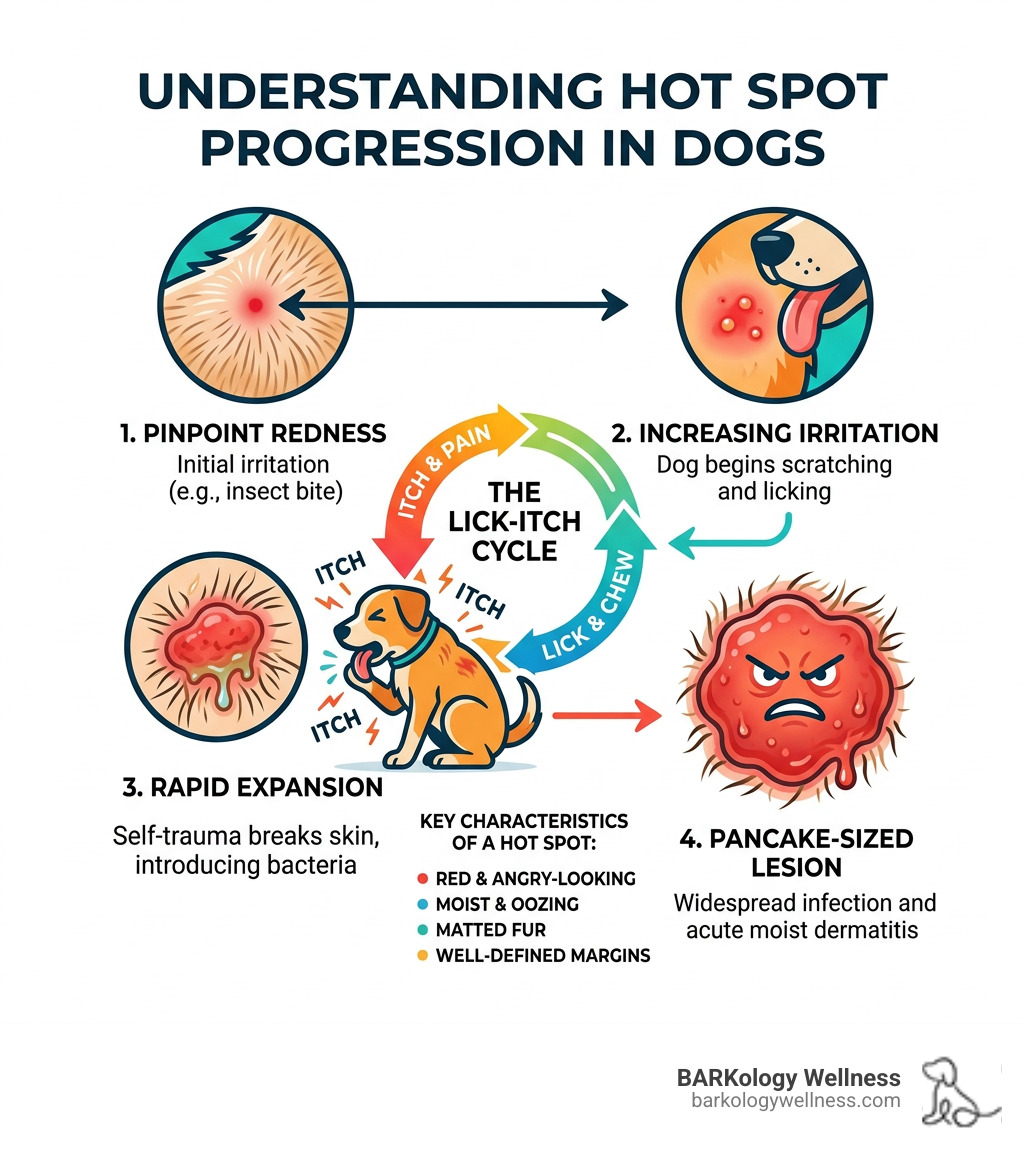
Hot spots, medically known as acute moist dermatitis or pyotraumatic dermatitis, are one of the most common skin conditions in dogs. They form when a dog scratches, licks, or chews at an irritated area, breaking the skin and creating a warm, moist wound where bacteria thrive. The more it itches, the more the dog licks. The more the dog licks, the worse it gets. This lick-itch cycle is what makes hot spots so hard to ignore and so important to catch early.
One moment you notice a small red spot. By the end of the day, it can be the size of a pancake.
I'm Nabilah Shamseddine, entrepreneur and wellness brand leader at BARKology Wellness, where our mission is to support dogs' full-body health, including the skin and coat care that helps prevent conditions like hot spot treatment dog owners face all too often. In this guide, I'll walk you through everything you need to treat and prevent hot spots the right way.
Identifying Symptoms and Root Causes
Before we dive into the best hot spot treatment dog parents can use, we need to know exactly what we are looking at. A hot spot isn't just a "rash." It is a localized area of skin inflammation and bacterial infection.
The hallmark of a hot spot is its appearance: it’s usually red, angry-looking, and moist. You might see a sticky discharge or pus oozing from the center, which often mats the surrounding hair. One of the most defining characteristics is that hot spots typically have well-defined margins, there is a clear line where the "angry" skin ends and the normal skin begins.
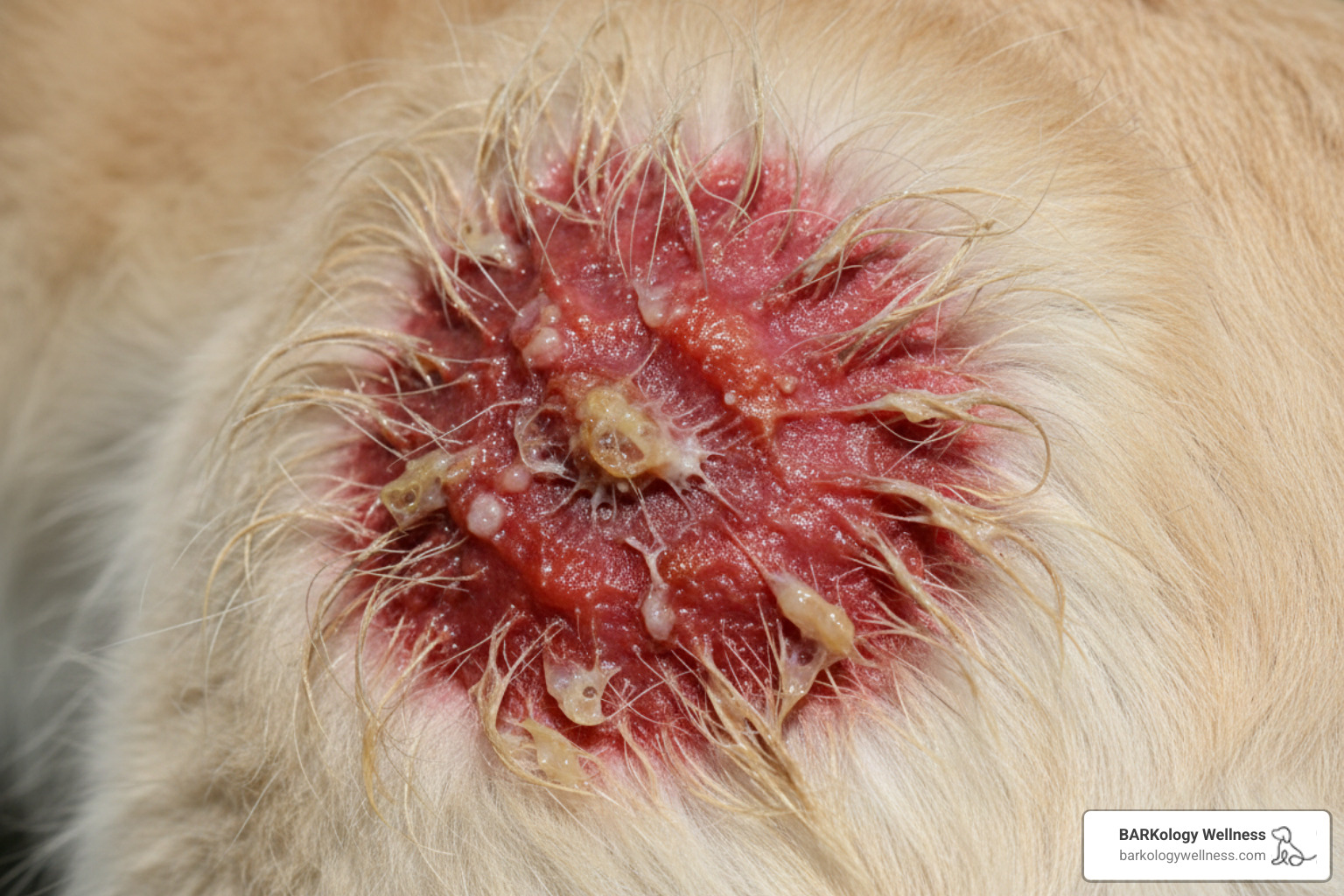
However, looks can be deceiving. Did you know that about 30 percent of pets brought into the hospital for "hot spots" actually have other skin diseases? These can range from deeper skin infections and bite wounds to immune-mediated ulcerations.
To help you distinguish a hot spot from other common issues, we’ve put together this comparison:
| Feature | Hot Spot (Acute Moist Dermatitis) | Ringworm | Mange (Demodectic/Sarcoptic) |
|---|---|---|---|
| Moisture | Very wet, oozing, sticky | Usually dry and crusty | Can be dry or oily |
| Speed | Appears in hours | Develops over days/weeks | Develops over weeks |
| Margins | Well-defined, clear borders | Often circular but scaly | Patchy, irregular hair loss |
| Pain Level | Very painful and tender | Usually not painful | Can be very itchy/uncomfortable |
Why Is My Dog Doing This?
A hot spot is almost always a secondary problem. Something else started the itch, and the dog’s response (the licking and chewing) created the hot spot. Common triggers include:
- Flea Allergy Dermatitis (FAD): This is the most common trigger. Just one flea bite can send an allergic dog into a scratching frenzy.
- Trapped Moisture: In our humid South Tampa climate, dogs who swim or get bathed without being dried thoroughly are at high risk. Moisture gets trapped against the skin, especially under thick coats or near the ears.
- Ear Infections: If a dog has an itchy ear, they will scratch the side of their face or neck, often creating a hot spot on the cheek.
- Anal Gland Inflammation: Dogs with full or irritated anal glands may lick their rear ends excessively, leading to hot spots at the base of the tail.
- Orthopedic Pain: Sometimes, a dog with arthritis will lick a sore joint (like a hip or hock) as a way to self-soothe, eventually breaking the skin.
Research has shown that maintaining a strong skin barrier is vital for preventing these irritations from turning into full-blown infections. For example, Scientific research on fatty acids for skin health highlights how Omega-3s (DHA and EPA) can reduce inflammation and help the skin stay resilient.
Breeds Most Prone to Needing a hot spot treatment dog Owners Trust
While any dog can develop a hot spot, we see certain "frequent flyers" here in Tampa. Breeds with thick, heavy, or double coats are much more susceptible because their fur traps heat and moisture, the perfect "greenhouse" for bacteria.
Breeds we often treat for skin wellness include:
- Golden Retrievers and Labrador Retrievers: Their love for water combined with dense undercoats makes them prime candidates.
- German Shepherds: Often prone to allergies and skin sensitivities.
- English Bulldogs: Their skin folds can trap moisture and bacteria easily.
- Saint Bernards: Heavy coats and a tendency to drool can keep the neck and chest area constantly damp.
In South Tampa, the combination of high humidity and frequent afternoon rain showers means these breeds need extra vigilance. If your dog has a double coat, they are essentially wearing a heavy wool sweater in a steam room, any small irritation can turn into a major hot spot in minutes.
Step-by-Step Guide to hot spot treatment dog Owners Can Do at Home
If you catch a hot spot while it’s still small (the size of a coin), you can often manage it at home. However, you must be gentle. These spots are incredibly painful, imagine a severe "road rash" or a burn on your own skin.
Step 1: Hair Clipping
The most important part of any hot spot treatment dog owners attempt is getting air to the wound. Bacteria that cause hot spots love moist, oxygen-deprived environments.
- Use an electric beard trimmer or pet-specific clippers. Never use scissors, as it is far too easy to cut the inflamed, swollen skin.
- Clip the hair liberally, extending about 1 inch beyond the edges of the sore. This allows you to see if the spot is spreading and ensures no matted hair is trapping more moisture.
Step 2: Antiseptic Cleaning
Once the area is cleared of fur, you need to disinfect it.
- Use a gentle antiseptic cleanser such as chlorhexidine.
- You can use Douxo™ Chlorhexidine 3% PS pads or Pet MD Chlorhexidine wipes to gently dab the area.
- If the dog is too sensitive for wipes, try rinsing the area with saline first to loosen debris.
Step 3: Topical Application
After cleaning, apply a soothing, pet-safe product to help the skin heal.
- Vetericyn® Plus Antimicrobial Pet Hot Spot Spray is a fantastic option because it is safe if ingested.
- Other effective topicals include HoneyCure or ZYMOX.
Step 4: Barrier Protection
This is the "make or break" step. If your dog can still lick the spot, it will not heal.
- A recovery cone (Elizabethan collar) is the gold standard.
- If your dog is a "cone escape artist," you might try a dog recovery suit to cover the area, provided the fabric is breathable.
When to Skip Home Care and See a Veterinarian
At BARKology Wellness, we always advocate for the comfort of the dog. Sometimes, a hot spot is simply too far gone for home treatment. You should call your South Tampa vet immediately if:
- The spot is large: Anything bigger than a small biscuit usually needs professional help.
- The skin is broken or deep: If you see signs of deep pyoderma (deep skin infection), home topicals won't be enough.
- Your dog is in distress: If they are crying, snapping when you touch the area, or acting lethargic/feverish.
- It’s spreading: If you treat it in the morning and it’s bigger by the afternoon.
A veterinarian can provide much-needed relief that we can't always do at home. They may prescribe topical or oral steroids to stop the intense itching immediately, or topical or oral antibiotics to fight the infection from the inside out. In some cases, especially with very painful dogs or thick-coated breeds, the vet may need to use mild sedation just to safely clip and clean the area.
Long-Term Prevention and Skin Wellness Strategies
Once you’ve successfully navigated a hot spot treatment dog owners often ask: "How do I make sure this never happens again?" Prevention is all about managing the "Big Three": Parasites, Moisture, and Stress.
1. Year-Round Parasite Prevention
In Florida, fleas don't take a winter vacation. Good parasite prevention for dogs is the foundation of skin health. Even if you don't see fleas, a single bite can trigger the lick-itch cycle. Ensure your dog is on a vet-recommended monthly preventive.
2. Moisture Management
If your dog loves the dog beaches or pools around Tampa, they need a "dry-down" protocol.
- Rinse off salt or chlorine with fresh water.
- Dry them thoroughly. A towel often isn't enough for double-coated breeds; consider a high-velocity dryer to get the moisture away from the skin.
- Pay special attention to the neck area under the collar. Woven collars generally allow more airflow than heavy leather or rubber ones.
3. Dietary Support
Healthy skin starts from within. Supplementing with fish oil for dogs provides the essential fatty acids DHA and EPA. These act as natural anti-inflammatories and help build a "moisture seal" on the skin, making it less likely to crack or become irritated.
4. Mental Stimulation and Stress Reduction
Sometimes, licking is a behavioral response to boredom or anxiety.
- Use interactive toys or puzzle toys to keep their minds busy.
- For anxious pups, VetriScience Calm & Confident Chews or an Adaptil diffuser can help lower stress levels that lead to obsessive licking.
Professional Grooming as a hot spot treatment dog Prevention Tool
Regular grooming isn't just about looking "dapper", it is a critical health intervention. At BARKology South Tampa, we specialize in the kind of expert care that keeps hot spots at bay.
- Mat Removal: Mats act like sponges, holding moisture and bacteria against the skin. Regular professional grooming services ensure your dog's coat is free of tangles and allows for proper air circulation.
- Skin Barrier Support: We use chlorhexidine shampoo for dogs and medicated dog wipes for pups prone to skin issues. These products help keep the bacterial population on the skin in check without stripping away natural oils.
- Hygiene Maintenance: We also check those "hidden" areas, like the ears and anal glands, which are often the true culprits behind a hot spot. For dogs with chronic issues, we might recommend Glandex or adding green beans with no added salt or sugar to their diet to help with natural anal gland expression.
Frequently Asked Questions about Canine Hot Spots
Are hot spots contagious to humans or other pets?
No, hot spots themselves are not contagious. You cannot "catch" a hot spot from your dog, and they won't spread it to the cat. However, the underlying cause might be contagious. If the hot spot was triggered by fleas or mites, those parasites can certainly jump to other pets or bite humans.
How long does it take for a hot spot to heal?
With prompt hot spot treatment dog owners usually see the lesion dry up and start to heal within 3 to 7 days. However, full recovery takes longer. While the infection might clear quickly, it usually takes about two weeks for the fur to start growing back. If the spot isn't noticeably better within 48 hours of starting treatment, it's time to see the vet.
Can I use human medications like Neosporin or hydrocortisone?
We strongly advise against this. While Neosporin (triple antibiotic ointment) is generally safe in small amounts, many human ointments contain zinc oxide, which is toxic to dogs if licked. Furthermore, human creams are often greasy, which can actually trap moisture in the hot spot and make the infection worse. Always stick to pet-safe, veterinary-approved alternatives like Vetericyn or Douxo Chlorhexidine Micro-Emulsion.
Conclusion
Hot spots are a frustrating and painful reality for many dogs, especially in the heat of Tampa. But with early detection and a proactive approach to skin health, you can break the lick-itch cycle before it starts.
At BARKology Wellness, we believe in a holistic approach to skin health that combines science with pampering care. Whether it's through our professional grooming services that prioritize air circulation and mat removal, or our wellness memberships designed to keep your pup in peak condition year-round, we are here to help.
Don't wait for a pinpoint to become a pancake. Keep your dog clean, dry, and flea-free, and you'll spend less time worrying about hot spots and more time enjoying the South Tampa sunshine together.