
When Your Dog Won't Stop Scratching: Understanding Canine Atopic Dermatitis
Canine atopic dermatitis is a chronic, inherited allergic skin disease that causes intense, recurring itch, and it affects an estimated 10–15% of all dogs.
Here's what you need to know at a glance:
| Question | Quick Answer |
|---|---|
| What is it? | A hereditary, immune-driven skin disease triggered by environmental allergens |
| Is it curable? | No, but it is manageable with the right treatment plan |
| Is it contagious? | No, not to people or other pets |
| When does it start? | Usually between 6 months and 3 years of age |
| Most common signs | Paw licking, face rubbing, ear inflammation, belly redness |
| Main triggers | Dust mites, pollens, molds, grasses |
| Best approach | Multimodal, combining medication, bathing, and allergen management |
Your dog isn't just being dramatic. The itch is real, constant, and exhausting, for them and for you.
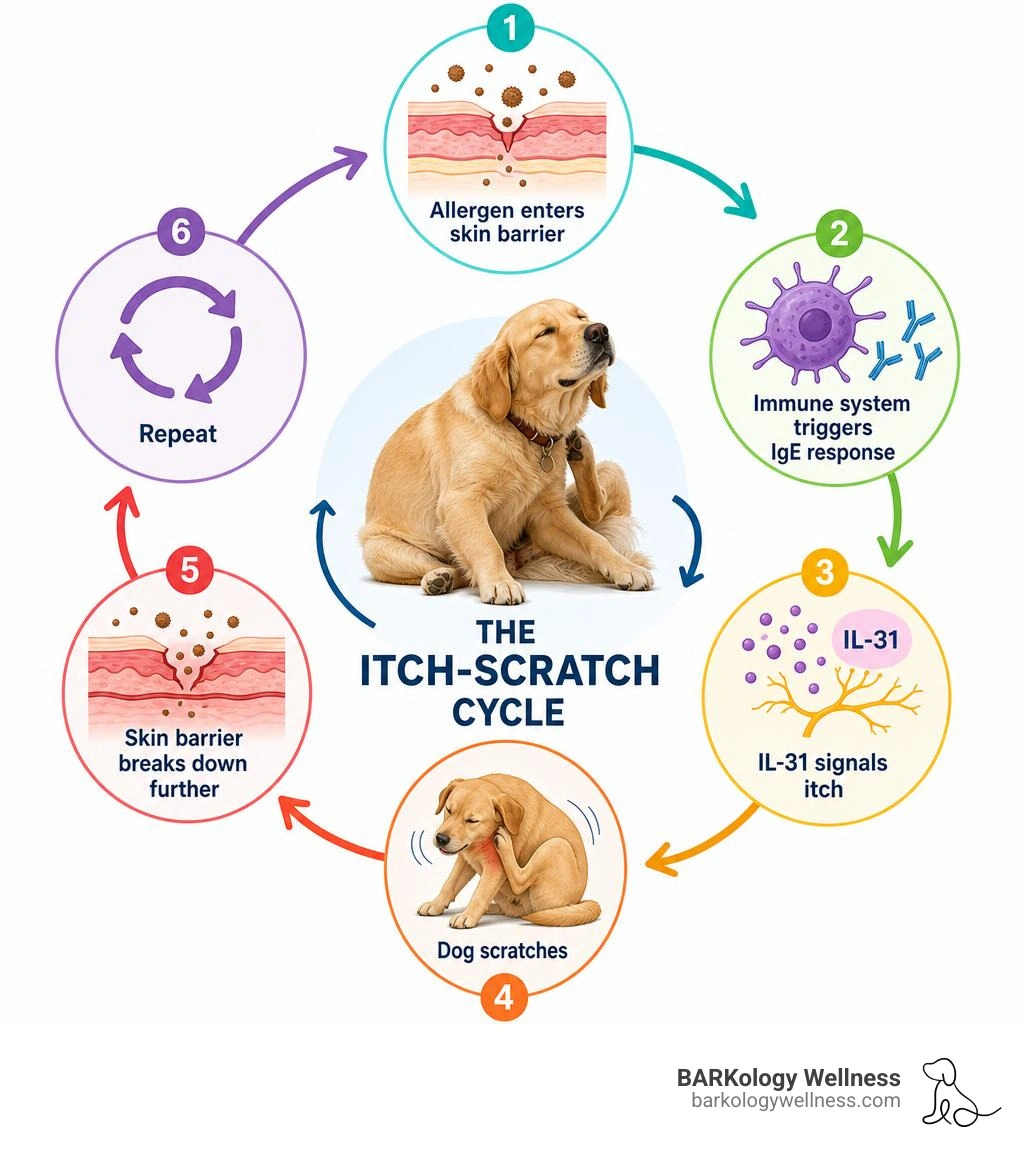
The condition works like this: a genetic flaw in the skin barrier lets environmental allergens (like dust mites or pollen) slip through the skin rather than being blocked out. The immune system overreacts, flooding the body with inflammatory signals. The result is a relentless itch-scratch cycle that, left unmanaged, leads to raw skin, hair loss, and painful secondary infections.
The good news? With the right diagnosis and a personalized treatment plan, most dogs can live comfortably, even if the condition never fully goes away.
This guide walks you through everything: what causes it, how it's diagnosed, and which solutions actually work in May 2026.
I'm Nabilah Shamseddine, founder of BARKology Wellness, where our mission is built around premium, health-focused care for dogs, including those managing chronic conditions like canine atopic dermatitis. My background in wellness and individualized client experiences drives everything we do, and this guide reflects that same commitment to giving your dog real, lasting comfort.
Essential canine atopic dermatitis terms:
What Canine Atopic Dermatitis Means for an Itchy Dog
Canine atopic dermatitis, often called atopy, is a chronic allergic skin disease driven by the immune system. It is usually inherited, commonly triggered by environmental allergens, and strongly linked to a weakened skin barrier.
In plain English: the skin is supposed to act like a bouncer at an exclusive club. In dogs with atopy, that bouncer is distracted, and allergens sneak in.
According to current veterinary understanding, CAD is not just "dry skin" or "sensitive skin." It involves a complex mix of:
- Skin barrier weakness
- Environmental allergen exposure
- Immune overreaction
- Itch-signaling chemicals
- Bacterial and yeast imbalance on the skin
A 2023 updated definition from the International Committee on Allergic Diseases of Animals emphasizes that CAD is hereditary, usually itchy, largely T-cell driven, and connected to skin barrier abnormalities, allergen sensitization, and microbial dysbiosis. You can read more in this scientific review on evolving canine atopic dermatitis understanding.
It is also a quality-of-life disease. Dogs may lose sleep, become irritable, lick themselves raw, develop ear infections, or avoid normal play. Families may feel frustrated by repeat vet visits, recurring flares, and the classic "we just fixed this two months ago" cycle.
The good news: CAD is not contagious, and while it usually cannot be cured, it can often be controlled beautifully with the right long-term plan.
How canine atopic dermatitis differs from fleas, food allergy, mites, and infection
Many itchy skin diseases look similar. That is why CAD is considered a clinical diagnosis of exclusion, meaning your veterinarian usually rules out other causes before confirming it.
Here is how CAD differs from common lookalikes:
| Condition | How it compares to CAD |
|---|---|
| Flea allergy dermatitis | Often causes itching over the rump, tail base, thighs, and belly. One flea bite can trigger major misery. |
| Food allergy or cutaneous adverse food reaction | Can look identical to CAD and may cause year-round itch, ear infections, or GI signs. Diagnosis requires a strict diet trial. |
| Sarcoptes mites, or scabies | Intensely itchy, contagious to other dogs, and can affect ear margins, elbows, hocks, and belly. |
| Demodex mites | May cause hair loss, scaling, redness, or infections; not usually the classic allergy pattern. |
| Bacterial pyoderma | Often a secondary infection with pustules, crusts, odor, and worsening itch. |
| Malassezia dermatitis | Yeast overgrowth causing greasy skin, odor, redness, thickening, and brown discoloration. |
| Contact irritation | Usually limited to where the skin touches a trigger, such as belly, paws, or muzzle. |
| Endocrine disease | Conditions like hypothyroidism or Cushing's disease can cause skin changes, but itch is usually from secondary infection. |
The tricky part? A dog can have CAD and fleas, yeast, bacteria, or food allergy at the same time. We think of these as flare factors: problems that may not be the original cause but absolutely pour gasoline on the itch fire.
Why canine atopic dermatitis develops
CAD develops because of a three-way conversation between genes, skin, and the immune system.
Common contributors include:
- Genetic predisposition: Certain dogs inherit a tendency toward allergic skin disease.
- Skin barrier dysfunction: The outer skin layer does not seal properly, letting allergens and irritants penetrate.
- Percutaneous allergen entry: Allergens enter through the skin, not just through breathing.
- Environmental allergens: House dust mites, pollens, molds, grasses, and other particles can trigger reactions.
- IgE antibodies: Many atopic dogs produce IgE antibodies against environmental allergens.
- T-cell inflammation: The immune system becomes chronically activated.
- IL-31 itch signaling: IL-31 is one of the major itch messengers in dogs.
- JAK pathway activation: Some itch and inflammation signals travel through Janus kinase pathways, which is why JAK-targeting medications can help.
- Microbial dysbiosis: Atopic skin often has less microbial diversity and more overgrowth of Staphylococcus bacteria or Malassezia yeast.
Healthy skin care matters because the skin barrier is central to this disease. For more everyday support ideas, visit our guide to dog skin care.
Dogs most at risk: age, breeds, and itch patterns
Most dogs with CAD show signs between 6 months and 3 years of age. About 70% of dogs with atopy are diagnosed between 1 and 3 years old.
Seasonality is also common. Roughly 40-75% of cases have a seasonal component, especially when pollens, grasses, or molds are major triggers. In Tampa and South Tampa, warm, humid weather can mean dogs face environmental allergens and skin moisture challenges for much of the year. Many dogs start with seasonal itch and later become itchy year-round.
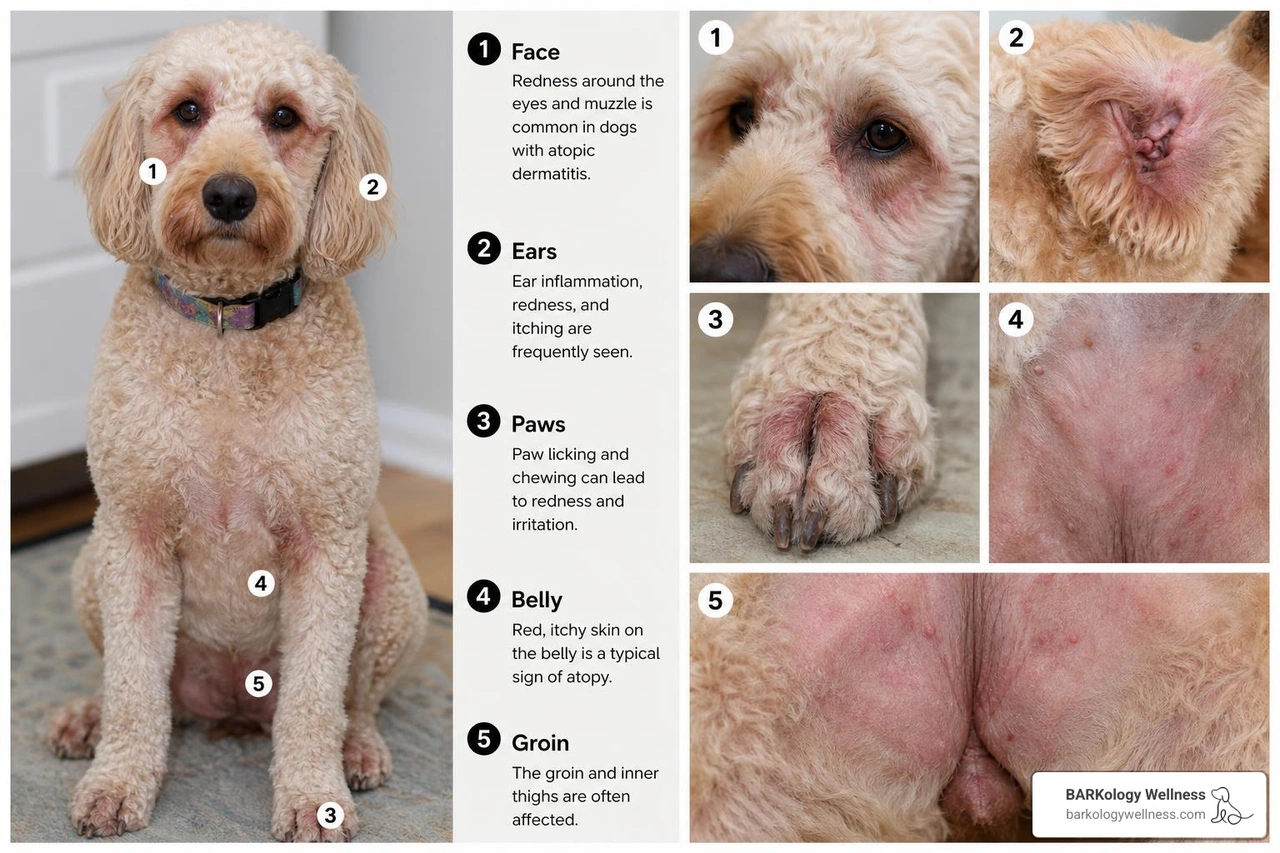
Common signs include:
- Paw licking or chewing
- Face rubbing
- Redness around the eyes or muzzle
- Recurrent ear inflammation or ear infections
- Itchy armpits, groin, belly, and inner thighs
- Red, inflamed skin on the feet
- Brown staining from saliva
- Hair loss from licking or scratching
- Thickened, darkened skin in chronic cases
- Recurrent bacterial or yeast infections
Classic CAD areas include the front paws, face, concave ear pinnae, axillae, groin, belly, perineum, and distal limbs. The ear margins and lower back are often less affected in classic CAD, which helps separate it from some other conditions.
Breeds commonly reported as predisposed include:
- Labrador Retrievers
- Golden Retrievers
- West Highland White Terriers
- Bulldogs and French Bulldogs
- Pugs
- Boxers
- German Shepherds
- Terriers
- Beagles
- Setters
- Miniature Schnauzers
Any dog can develop CAD, but breed patterns can help raise suspicion early.
Diagnosing Canine Atopic Dermatitis: From History to Allergy Testing
CAD is not diagnosed by one magic test. There is no single blood test, skin swab, or "itch-o-meter" that confirms it. Diagnosis comes from combining history, physical exam, lesion pattern, age of onset, response to treatment, and ruling out similar diseases.
Veterinary guidelines recommend a systematic workup: first exclude fleas, mites, infection, and food allergy when appropriate; then use clinical criteria; then consider allergy testing if immunotherapy is planned. A helpful reference is this detailed diagnosis and allergen identification guidelines.
History, exam, and Favrot’s criteria for canine atopic dermatitis
Favrot's criteria are a set of clinical features that help veterinarians decide whether CAD is likely. Meeting five criteria has been reported to provide about 85% diagnostic accuracy, with sensitivity and specificity in a clinically useful range. These criteria are not perfect, but they are a strong guide when used with a proper workup.
Favrot's commonly used diagnostic criteria include:
- Age of onset under 3 years
- Mostly indoor lifestyle
- Itching responds to corticosteroids
- Itch started before visible skin lesions
- Front paws are affected
- Ear pinnae are affected
- Ear margins are not affected
- Dorsolumbar area, or lower back, is not affected
- Chronic or recurrent yeast infections
The veterinarian will also ask questions such as:
- When did the itch first start?
- Is it seasonal or year-round?
- Which areas does your dog lick or scratch?
- Are there recurring ear infections?
- What flea prevention is used?
- What foods, treats, chews, and flavored medications are given?
- Have antibiotics, antifungals, steroids, Apoquel, Cytopoint, or cyclosporine helped?
- Are other pets or people itchy?
That history is gold. A good itch timeline can save weeks of guessing.
Ruling out the lookalikes before confirming CAD
Before confirming CAD, your veterinarian may recommend:
- Flea combing and strict flea prevention
- Skin scrapings for mites
- Hair plucks to evaluate hair follicles and parasites
- Acetate tape impressions or skin cytology
- Ear cytology for yeast and bacteria
- Bacterial culture in recurrent or resistant infections
- Trial treatment for scabies in suspicious cases
- An 8-week elimination diet trial when food allergy is possible
Food trials deserve special respect. A proper elimination diet is strict. That means no table scraps, no flavored chewable medications unless approved, no random treats, no bully sticks, no peanut butter sneaking, and no "just one bite, he looked sad."
Diet options may include a veterinary hydrolyzed diet or a carefully chosen novel protein diet. Some dogs need home-cooked diet trials supervised by a veterinarian or veterinary nutritionist. Improvement must then be confirmed with a food challenge, because improvement alone does not always prove food allergy.
What IDT and allergen-specific IgE serology can, and cannot, tell you
Allergy testing is useful, but it is often misunderstood. Intradermal testing and allergen-specific IgE serology are not used to diagnose CAD by themselves. They are mainly used after CAD is suspected or diagnosed, to identify allergens for allergen-specific immunotherapy.
| Test | What it does | Strengths | Limitations |
|---|---|---|---|
| Intradermal testing, or IDT | Small amounts of allergens are injected into the skin and reactions are measured | Often preferred by veterinary dermatologists; can reflect skin reactivity | Requires clipping/sedation in many cases; medications can interfere; 10-30% of confirmed CAD dogs may test negative |
| Allergen-specific IgE serology, or ASIS | Blood test measuring IgE antibodies to allergens | Easier to perform; no sedation or clipping | False positives occur; results vary by lab; does not prove disease by itself |
| Both tests | Help select allergens for immunotherapy | Useful for long-term planning | Should not replace history, exam, and rule-out testing |
False positives can occur in healthy dogs. False negatives can happen too. Results also depend on regional allergen selection, medication timing, test quality, and interpretation. This is one reason referral to a veterinary dermatologist can be so helpful.
Stop the Itch: Current Treatment and Flare-Control Solutions
The best CAD treatment plans are multimodal. That means we do not expect one product to do everything. A dog may need infection control, itch relief, bathing, flea prevention, diet discipline, barrier support, and possibly immunotherapy.
The treatment goal is not "never itch again." The goal is fewer flares, milder flares, healthier skin, fewer infections, and a dog who can sleep through the night without turning into a furry tambourine.
For a veterinary overview, see this veterinary manual treatment overview. For general skin support, we also share more on dog skin treatments.
Treat secondary infections before escalating allergy medication
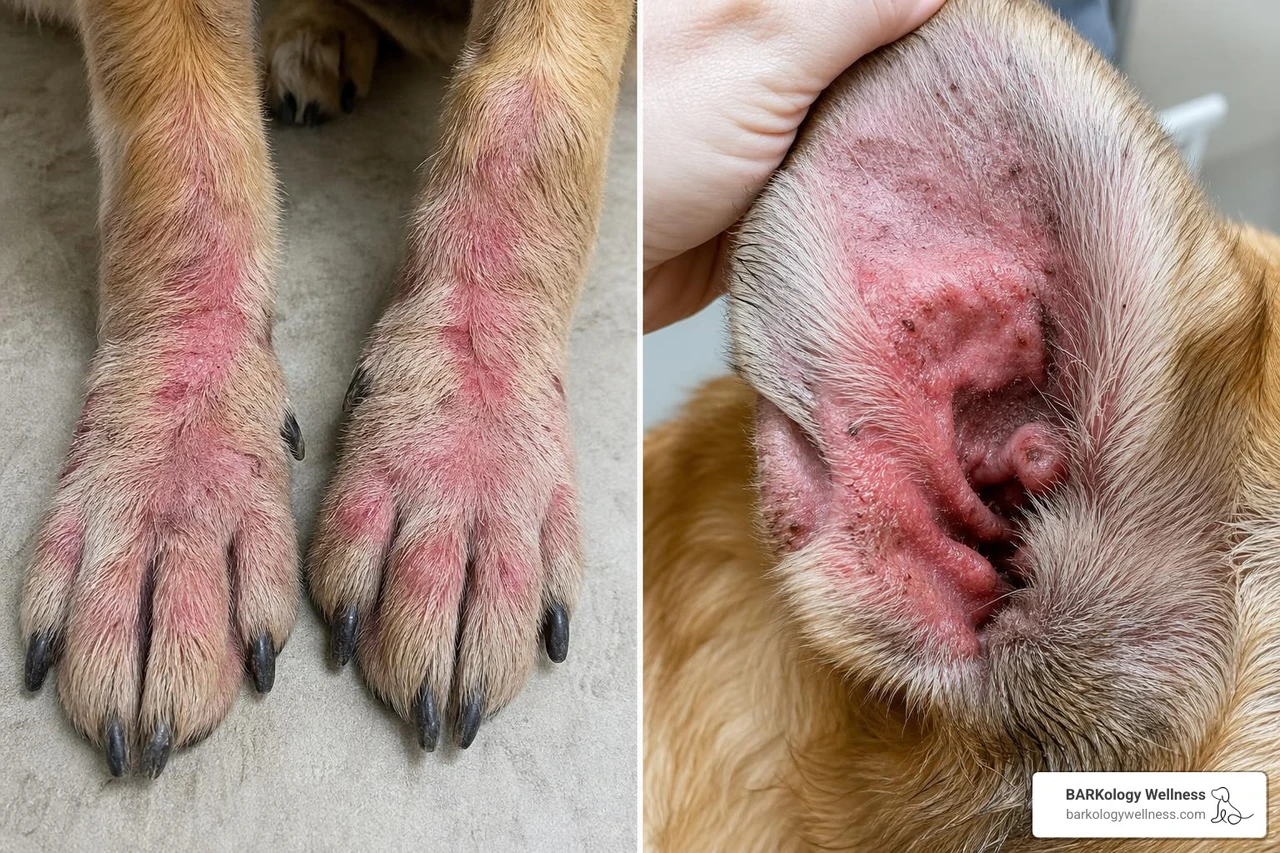
Secondary infections are extremely common in CAD and can make a controlled dog suddenly seem "medication resistant."
Signs of bacterial pyoderma may include:
- Pustules
- Crusts
- Circular areas of scale
- Red bumps
- Hair loss
- Oozing or soreness
Signs of Malassezia yeast overgrowth may include:
- Musty odor
- Greasy skin
- Brown waxy ears
- Red paws
- Thickened skin
- Dark pigmentation
- Intense licking
Ear infections, or otitis externa, may be the only obvious sign in some dogs.
Cytology is key. A veterinarian can press tape or a slide to the skin, stain it, and look for bacteria or yeast. That helps avoid unnecessary antibiotics and supports antimicrobial stewardship. Mild cases may respond to topical therapy, such as chlorhexidine or antifungal shampoos, wipes, mousses, or ear medications. More severe cases may need oral medications guided by exam findings or culture.
Fast itch relief options for canine atopic dermatitis
Fast relief matters because scratching damages the skin barrier and invites infection.
Common veterinary options include:
| Treatment | Typical role | Notes |
|---|---|---|
| Short-course glucocorticoids | Rapid flare control | Effective but long-term use can cause side effects; best used at the lowest effective dose for the shortest practical time |
| Oclacitinib | Fast itch and inflammation control | Often works within 24 hours; generally for dogs over 12 months; monitoring is important |
| Cyclosporine | Longer-term immune modulation | May take 4-8 weeks; GI upset can occur; useful for chronic control |
| Lokivetmab | Injectable anti-IL-31 therapy | Often lasts about a month; research reports itch relief for one month in about 80% of dogs |
| Topical steroids | Local flare control | Helpful for paws, belly, and small areas; overuse can thin skin |
| Tacrolimus or other calcineurin inhibitors | Local immune control | May help targeted lesions; use as directed |
| Antihistamines | Mild support in some dogs | Often limited benefit because histamine is not the only itch signal |
| Essential fatty acids | Barrier and inflammation support | May take 6-8 weeks to notice benefit |
Your veterinarian may tailor medication based on age, infection status, other health conditions, cost, and how quickly relief is needed. Dogs on long-term immune-modulating therapy may need monitoring for infections and general health changes.
For more comfort-focused ideas, visit itchy skin dog relief.
Disease-modifying therapy: allergen-specific immunotherapy
Allergen-specific immunotherapy, or ASIT, is the closest thing CAD has to a disease-modifying treatment. Instead of only blocking itch, ASIT trains the immune system to tolerate allergens more calmly.
Forms include:
- Allergy shots, also called subcutaneous immunotherapy
- Sublingual immunotherapy, given under the tongue
- Less common protocols used by specialists in select cases
ASIT is formulated based on IDT or IgE serology results and regional allergen relevance. It does not work overnight. Many dogs need 6-12 months before clear improvement, and most specialists recommend committing for at least one year before judging success.
Reported outcomes vary, but studies and reviews commonly suggest:
- Around 50% of dogs show clinical improvement within 12 months
- Around 80% may need less symptomatic medication within 12 months
- Overall success is often described around 66-70%, depending on the study and protocol
Some dogs still need Apoquel, Cytopoint, bathing, or flare medication, especially during high-allergen seasons. Rarely, allergic reactions can occur after injections, so dogs may be monitored after administration, especially early in treatment.
Bathing, grooming, diet, and environmental control that support treatment
Bathing and grooming are not "just cosmetic" for atopic dogs. They can remove allergens, reduce microbial buildup, soothe inflamed skin, and support the barrier. At BARKology Wellness in South Tampa, our grooming and wellness approach is built around comfort, gentle handling, and tailored care, which can be especially valuable for sensitive, allergy-prone dogs.
Helpful supportive strategies include:
- Weekly to biweekly bathing if recommended by your veterinarian
- Dog-safe shampoos only, never human shampoo
- Medicated shampoos when prescribed, such as chlorhexidine or antifungal formulas
- Moisturizing rinses or barrier-support products when appropriate
- Paw wipe-downs after walks during pollen-heavy days
- Regular ear checks for redness, odor, or discharge
- Consistent flea prevention year-round
- Washing bedding in hot water when possible
- Using HEPA filtration and frequent vacuuming
- Reducing dust mite exposure in sleeping areas
- Keeping skin folds clean and dry in wrinkly breeds
- Supporting the diet with veterinary-approved omega-3 fatty acids
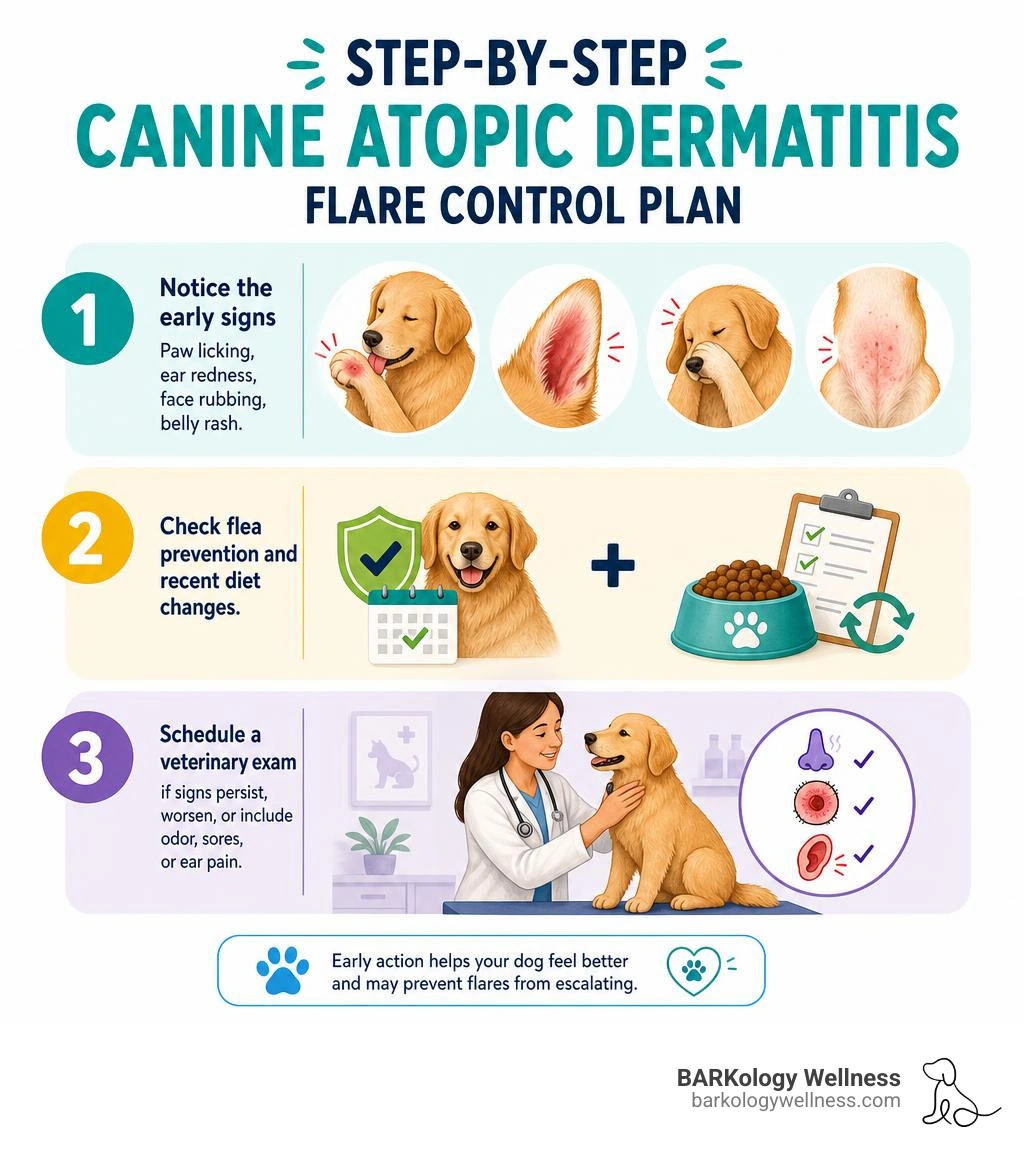
A simple flare-control plan looks like this:
- Notice the early signs: paw licking, ear redness, face rubbing, belly rash.
- Check flea prevention and recent diet changes.
- Schedule a veterinary exam if signs persist, worsen, or include odor, sores, or ear pain.
- Treat infection based on cytology.
- Use itch medication as prescribed.
- Bathe or groom on a skin-safe schedule.
- Track triggers in a flare diary.
- Recheck and adjust the long-term plan.
Home care can help, but it should not replace diagnosis. Natural does not always mean safe, especially on inflamed skin. Before trying oils, vinegar, essential oils, or homemade mixtures, please check with your veterinarian. For safe supportive ideas, see canine dermatitis home remedies.
Frequently Asked Questions About Canine Atopic Dermatitis
Is canine atopic dermatitis contagious to people or other pets?
No. CAD is not contagious to humans, dogs, cats, or anyone else in the home. It is related to genetics, skin barrier function, and immune response.
However, some lookalikes are contagious, especially Sarcoptes mites. Also, secondary bacteria or yeast can build up on the skin, so basic hygiene and veterinary care still matter. If multiple pets or people are itchy, that is a reason to call your veterinarian promptly.
Dogs diagnosed with CAD should generally not be bred, because allergic skin disease can have a hereditary component.
Can canine atopic dermatitis be cured?
Usually, no. CAD is a lifelong condition, and there is no vaccine that prevents it.
But "not curable" does not mean "hopeless." Many dogs reach excellent control with:
- Consistent flea prevention
- Infection monitoring
- Seasonal treatment adjustments
- Medicated bathing
- Skin barrier support
- Diet trials when needed
- Targeted itch medication
- Allergen-specific immunotherapy
Some dogs go into long periods of remission. Others need ongoing maintenance. The realistic goal is comfort: fewer scratches, fewer infections, fewer sleepless nights, and more tail wags.
When should an itchy dog see a veterinary dermatologist?
A veterinary dermatologist can be especially helpful when:
- Itch is severe or constant
- Ear infections keep returning
- Skin infections recur despite treatment
- Allergy medications are not working well
- A strict diet trial failed or was difficult to interpret
- Allergy testing and immunotherapy are being considered
- Lesions look unusual
- Skin biopsy may be needed
- Long-term medication safety is a concern
- Your dog has multiple overlapping conditions
Referral is not a failure. It is a power move. Dermatologists have advanced tools for complex allergy cases, and they can help build a long-term plan that fits your dog.
Conclusion: Build a Lifelong Itch-Control Plan Your Dog Can Live With
Canine atopic dermatitis is chronic, frustrating, and sometimes sneaky. It can look like fleas, food allergy, mites, yeast, bacteria, or "just dry skin." But once properly diagnosed, it can usually be managed with a smart, layered plan.
The best long-term strategy includes:
- Early veterinary diagnosis
- A written flare diary
- Strict flea prevention
- Diet discipline during food trials
- Cytology-guided infection treatment
- Medications tailored to your dog's needs
- Regular rechecks
- Gentle grooming and bathing support
- Seasonal adjustments before flares explode
- Tapering medications to the lowest effective dose when possible
At BARKology Wellness, we support dogs in Tampa and South Tampa with luxury grooming and wellness care designed around health, comfort, and individualized attention. We do not replace your veterinarian, but we can be part of your dog's comfort team by helping maintain clean skin, a healthy coat, and a calmer care experience.
If your dog is living with chronic itch, do not wait for the next raw paw or ear flare. Build the plan, track the triggers, and give your dog the relief they deserve.
Explore our dog wellness services to learn how we can support your dog's skin and coat care journey.